
📝 Why traditional to-do lists often fail procrastinators (and what to do instead)
Hey there, let's be real for a moment. We've all been there, right? You stare at a to-do list. It feels less like a helpful guide. It's more like a never-ending scroll of shame. You write down everything you need to do. Your intentions are good. An hour later, you might find yourself watching cat videos. Or perhaps you're reorganizing your sock drawer instead. Sound familiar? If so, you are definitely not alone.
For us procrastinators, traditional to-do lists often feel like part of the problem. They have simple bullet points and checkmarks. They seem like a solution, but they aren't always. They promise order. Often, they deliver overwhelm. They aim for productivity. Yet, they can spark a new wave of procrastination. So, why do these lists let us down? Especially when we need them most? Let's figure out why. More importantly, let's find out what we can do about it.
😟 The "to-do list trap": why they don't work for us procrastinators
It's not you, it's the list. Seriously. Standard to-do lists have flaws. They don't help us tackle procrastination. They often lack key ingredients. We need these to actually get moving. Think of it like trying to start a fire. You have kindling. But you have no spark or sustained heat. It's just not going to happen.
🤯 Overwhelm and analysis paralysis
Imagine a huge buffet with a hundred dishes. It looks delicious, right? It can also be too much. That's how a long, jumbled to-do list feels. It shows us many tasks. All of them seem to need immediate attention. This is more than a mild problem. It's a real psychological barrier.
When our brains face too many choices, they often freeze. This is called analysis paralysis. We don't pick one thing and start. Instead, we use valuable mental energy trying to decide:
- ❓ What to do first?
- ❓ Where to even begin?
Sometimes, we get stuck in this loop. We end up doing nothing at all. The list should clarify our path. Instead, it becomes a fog. It hides any clear direction. For example, your list might say:
- 📝 Work on project
- 🧹 Clean apartment
- 💪 Go to gym
- 📧 Reply to emails
Where do you even start? Each item feels like a mountain. Your motivation disappears. It's gone before you even tie your hiking boots.

🗺️ Lack of structure and prioritization
Traditional to-do lists are usually flat. Every item looks the same. It doesn't matter if it's "Save the world" or "Buy milk". There is no built-in order. There is no sense of urgency. This lack of structure is a big problem for procrastinators.
When everything seems equally important, or unimportant, it's easy to:
- ✅ Choose the easiest task.
- 📉 Pick the least impactful task.
- 📱 Just scroll aimlessly.
We need to know what truly makes a difference. Without this, we are left guessing. Or worse, we avoid important tasks completely. We might spend an hour perfecting an email. Meanwhile, a big project deadline is coming. Why? The email felt less scary. This isn't about being lazy. It's about not having clear direction.
We need to know:
- ❓ What to do.
- ⏰ When to do it.
- 💡 Why it matters.
Traditional lists rarely give us this context.
🚫 No built-in motivation or reward
Let's be honest. Ticking a box on paper or a screen isn't thrilling. For some, that small satisfaction is enough. But for many of us, especially procrastinators, it's not enough.
We thrive on:
- 📈 Visible progress.
- ✨ Positive feedback.
Imagine training for a marathon. You never see your distance increase. You get no praise for your runs. You'd probably lose motivation fast, right?
Our brains love rewards. They crave dopamine hits. These tell us, "Hey, you did good! Do that again!" A to-do list only gives a quick checkmark. It fails to give us consistent motivational boosts. These boosts keep us engaged and moving. There's no visual proof of our combined efforts. There's no feeling of building something bigger. It's just one task done, then onto the next. This can feel endless and uninspiring.
❓ Ignoring the "why"
Most to-do lists focus on the "what". What needs to be done? But they rarely ask about the "why". Why is this task important? Why does it matter to you?
For procrastinators, connecting a task to a bigger purpose is key. It helps us find the inner drive to start. It links to a personal value. If you just write "Exercise":
- 🤔 You don't think about why you want to exercise.
- ⚡ Maybe you want to feel more energetic.
- 🍎 Perhaps you want to be healthier.
- 🏖️ Or you want to look great for that vacation.
Without a "why", it's just another item. It's easy to ignore. The "why" gives the task meaning. It turns a chore into a step towards a goal. Without this deeper link, tasks feel random. This makes them easy to put off.
😔 The shame spiral
This is a very tricky part. We often fail to finish tasks on our lists. When this happens regularly, we start to believe we are failures.
Each unchecked box is a reminder of what we didn't do. This leads to:
- 😞 Guilt.
- 😤 Frustration.
- 👎 Feeling less capable.
It's a bad cycle. The more tasks we leave undone, the more we feel like failures. This makes us less likely to start new tasks. We fear we will just fail again. We start to dread looking at the list. We even dread making a new one. It becomes a symbol of our weaknesses. This emotional weight makes starting incredibly hard. It traps us in a cycle of avoidance and self-blame. We need a system that helps us grow. We don't need one that tears us down.
✨ Beyond the bullet points: what really works?
So, traditional lists don't work. What's the alternative? Don't worry. It's not about giving up on organizing. It's about using smarter, more engaging strategies. These strategies play to our strengths. They also help with our weaknesses as procrastinators. We need tools that do more than just tell us what to do. We need tools that actually help us do it.
🪜 Breaking down the mountain
Ever heard, "How do you eat an elephant? One bite at a time."? It's a common saying for a good reason, it's true! Big, scary tasks often trigger procrastination most. They look like a huge block. They seem impossible to move. The solution?
Break them down into tiny, actionable steps. I mean really tiny, maybe two-minute tasks. Instead of "Write report," try these steps:
- 📄 Open document.
- ✍️ Write introduction paragraph.
- 🔍 Find three supporting facts.
Each small step feels possible. This builds momentum. It reduces that first resistance. When you finish a small step, you get a small burst of dopamine. This encourages you to take the next tiny step. It's like building a LEGO castle. You add it brick by brick. You wouldn't try to build the whole thing at once, would you?
🗓️ Time blocking and scheduling
A big problem with procrastination is tasks just float. They have no real home in our day. Time blocking gives your tasks a specific time slot. It's like an appointment you can't miss. Instead of a general "Work on project today," you'd schedule something like:
- 🗓️ Project Alpha: Outline, 10:00 AM - 11:30 AM.
This creates a feeling of commitment. It takes away the mental load of always deciding what's next. It also makes it harder to procrastinate. You've basically made a promise to yourself. When your calendar says it's time for that task, it's time. This structure is very powerful for us. It removes the element of choice. That's often where procrastination starts. Think of your schedule as a blueprint for your day. It's not just a vague wish list.
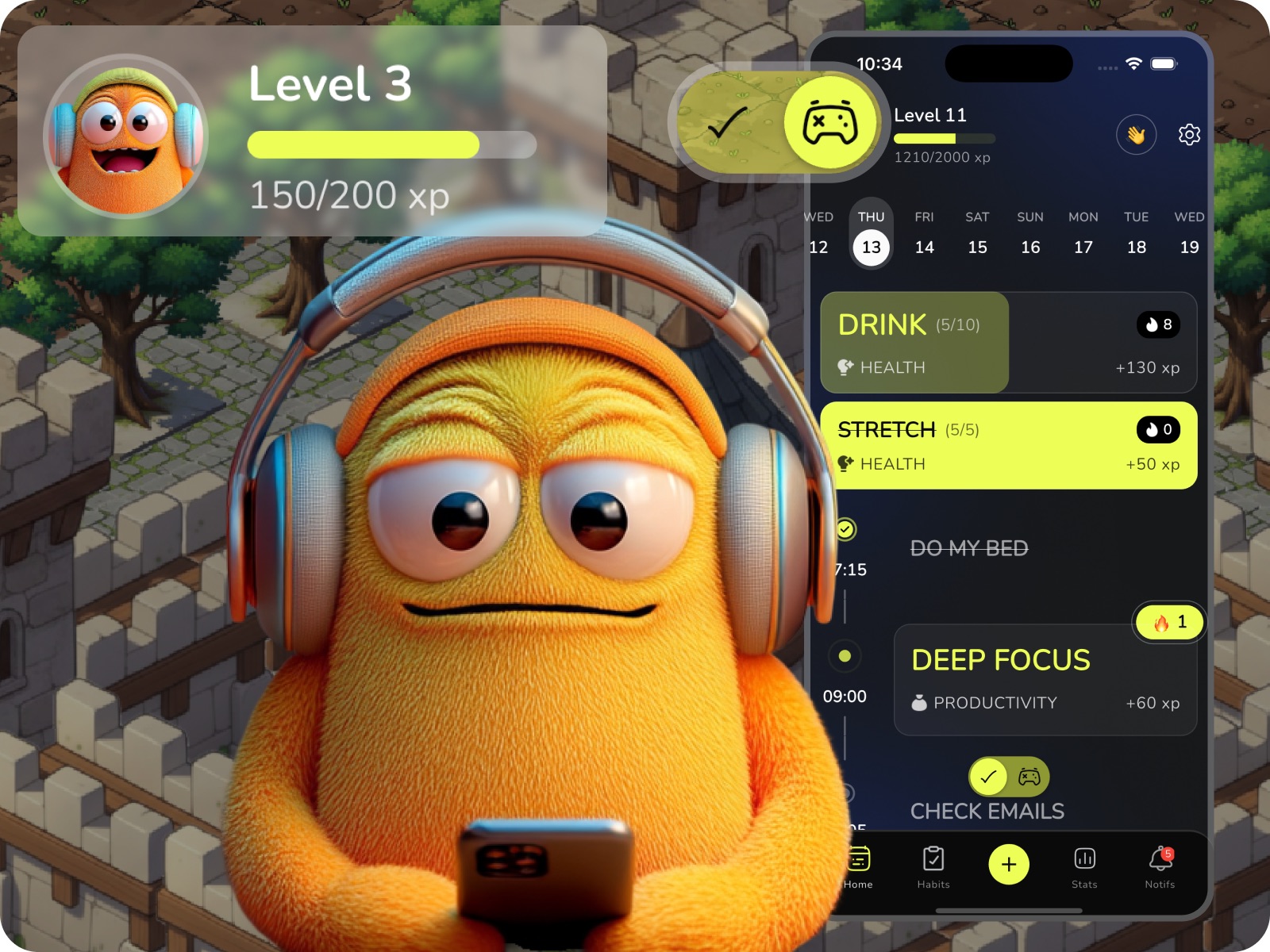
🎮 Gamification: making progress visible and rewarding
This is where things get really fun. Remember how we said traditional lists lack rewards? Gamification changes your productivity into a game. It uses our natural desire for:
- 🏆 Achievement.
- 🌟 Recognition.
- 📊 Visual progress.
Imagine each finished task. It's not just a checkmark. It's a building block for something amazing. This taps into our natural drive for growth. It fuels our desire for achievement. You can actually see your efforts adding up. Think of building a virtual city. This provides constant, engaging motivation. Every small success adds to a bigger, more impressive outcome. This isn't just about fun. It uses strong psychological rules. These rules keep you engaged and committed. It's like a personal high score for your life. It pushes you to keep going.
🔄 The power of habits, not just tasks
Tasks are one-off actions. Habits are repeated behaviors. Focusing on habits is a game-changer for long-term success. It helps overcome chronic procrastination.
When you turn a task into a habit, it needs less willpower. Your brain automates it. Think about brushing your teeth. You don't think "I need to brush my teeth now." You just do it.
The goal is to build small, consistent actions. These actions become automatic. They lead to big results over time. An AI assistant, like the one in Kubbo, can help here. It asks you questions. Then it suggests habits personalized for you. This makes habit formation easier and more relevant. Focus on consistency, not perfection. A small daily habit is more powerful than a huge task done once a month.
For example, instead of:
- ✍️ "Write for 3 hours on my novel"
Try:
- ✒️ "Write one sentence for my novel every morning."
- 📖 "Read one page of a book before bed."
These tiny actions build a strong foundation. They lead to significant progress without feeling overwhelming.
🏗️ Ready to build your progress?
So, traditional to-do lists often fail us. They create overwhelm and lack motivation. But there's good news. You don't have to give up on productivity.
By using smarter strategies, you can transform your approach. Remember to:
- 🧩 Break tasks into tiny steps.
- ⏰ Block out time for specific actions.
- 🎮 Gamify your progress to make it rewarding.
- 🌱 Focus on building sustainable habits.
These methods turn daunting tasks into manageable, even fun, challenges. They build momentum and keep you engaged. Our app, Kubbo, is designed exactly for this. It helps you create daily tasks and habits. You get virtual buildings for your city as you complete them. Our AI assistant can even suggest personalized habits for you. Ready to build your virtual city and conquer procrastination? Give Kubbo a try and start seeing your progress come to life!