KUBBO vs Atoms
One teaches you the Atomic Habits method, one lesson at a time. The other turns your habits into a game you want to play. Method vs motivation.
| Feature | KUBBO | Atoms |
|---|---|---|
| App Store Rating | 4.9 ★ | 4.8 ★ (10K ratings) |
| Core Metaphor | Medieval city building | The Atomic Habits method |
| Primary Focus | Motivation via a game | Identity-based habits + lessons |
| Reward System | XP + Gold + empire | Visual growth + insights |
| Gamification Depth | Deep (levels, Gold, city) | Minimal (by design) |
| Daily Lessons | No | Yes (from James Clear) |
| Motivation Style | Extrinsic (instant rewards) | Intrinsic (identity) |
| AI Habit Coach | Yes | Guided lessons |
| Free Tier | Core game free | 1–3 habits |
| Missed Habit Penalty | Building buried (recoverable) | Streak / insight |
| Price | Free (premium optional) | Free limited (Pro ~$39.99/yr) |
A Method vs A Game
Your Habits Become a Kingdom
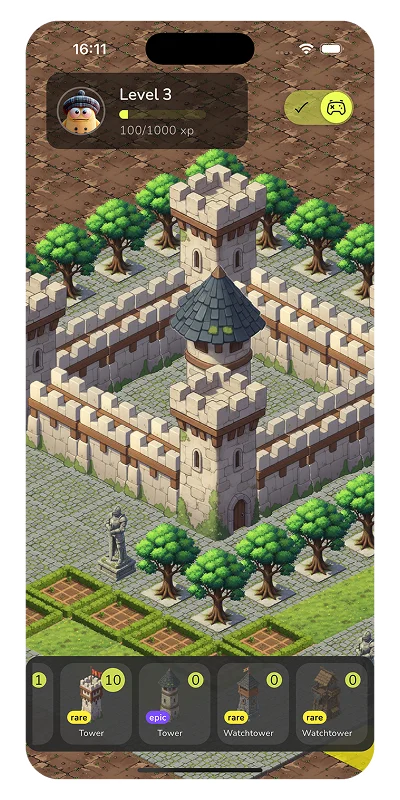
KUBBO doesn't teach you about habits — it makes doing them fun. Every habit earns XP and Gold; Gold buys towers, walls, and decorations that grow into a medieval city. Your character levels up, achievements unlock, and an AI coach nudges you along. The motivation is baked into the game loop, so you keep showing up because something rewarding is waiting.
The Atomic Habits Playbook
Atoms is the official companion to James Clear's bestseller. It puts the book's framework — make habits obvious, attractive, easy, and satisfying — into an app, with bite-sized daily lessons, guided habit creation, and an identity-first approach. It's less a tracker and more a coach, helping you understand the science and build the right systems in about five minutes a day.
Identity vs Instant Reward
Motivation You Feel Now
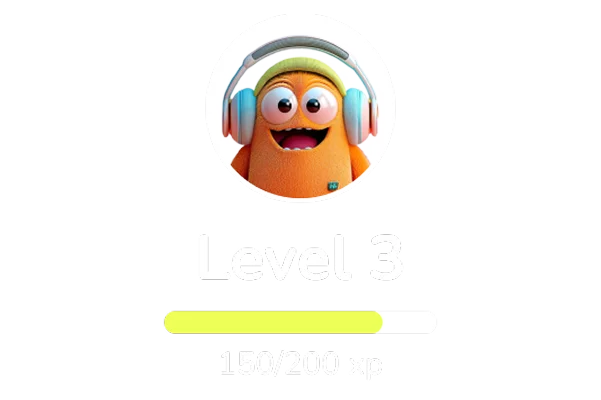
KUBBO bets on extrinsic motivation done well: your brain gets the same hit from XP, Gold, and a growing city that it gets from a game, pointed at your real habits. For people who know what to do but struggle to actually do it, that instant feedback bridges the gap — no lesson required, just an action and a reward.
Become the Kind of Person
Atoms bets on intrinsic motivation: you build habits based on the identity you want — "I'm the kind of person who exercises" — and start small enough to stay consistent. It's a calmer, deeper philosophy that can create durable change without leaning on points. The flip side is there's no game pulling you back on the days motivation is simply low.
When You Miss a Day
A Buried Building
Miss habits for 48 hours and a random building in your city gets buried — hidden, not destroyed. Buy a shovel with Gold you already earned and dig it out. The stake is playful and recoverable: you care about your city, so you come back, but a rough stretch never erases your progress or guilt-trips you into quitting.
Never Miss Twice
True to the book, Atoms treats a missed day as a normal part of the process — the principle is "never miss twice." There's no penalty, just your streak and insights reflecting reality, plus the mindset coaching to get back on track. It's a healthy, low-pressure approach; it simply relies on your own resolve rather than a built-in mechanic nudging you back.
Which One Is Right for You?
Choose KUBBO if you...
- → Know what to do but struggle to actually do it
- → Want game mechanics — XP, Gold, levels, a city to build
- → Need instant, visible rewards (great for ADHD)
- → Find lessons and theory less motivating than play
- → Want an AI coach and counters with goals
- → Prefer a recoverable consequence over pure willpower
Choose Atoms if you...
- → Love Atomic Habits and want James Clear's method
- → Want bite-sized daily lessons and coaching
- → Prefer an identity-based, intrinsic approach
- → Want to understand the science behind habits
- → Are already fairly self-motivated
- → Don't want or need a game to stay consistent
Frequently Asked Questions
What is the main difference between KUBBO and Atoms?
Atoms is the official Atomic Habits app from James Clear — it teaches his method with bite-sized daily lessons and helps you build identity-based habits, focusing on intrinsic motivation. KUBBO is a gamified habit tracker that turns every habit into XP and Gold to build a medieval empire, focusing on instant, extrinsic motivation. Atoms gives you the wisdom and framework; KUBBO gives you a game that makes you want to act today.
Does Atoms have gamification?
Not really. Atoms keeps things minimal and intentional — you press a habit to watch it grow with a satisfying animation, and you get progress insights, but there's no XP, currency, levels, or game world. That's by design: Atoms leans on intrinsic motivation and identity. KUBBO does the opposite, with deep gamification — XP and Gold on every action, character levels, achievements, and a city you build — to supply motivation when willpower alone isn't enough.
Is KUBBO or Atoms better for ADHD?
KUBBO is often the stronger fit for ADHD because it provides immediate, tangible rewards — XP and Gold on every action and a city that visibly grows — which helps brains that struggle with delayed gratification and starting. Atoms is excellent if you respond to understanding the science and reshaping your identity, with calm daily lessons. If you need the doing to feel rewarding right now, choose KUBBO; if you want the method and mindset, choose Atoms.
Is Atoms free like KUBBO?
Both are free to download, but Atoms' free tier is limited (tracking just one to three habits and limited lessons), with Atoms Pro around $39.99/year unlocking the full experience. KUBBO is free with the core gamification — XP, Gold, and city building — available without paying, plus optional premium features. KUBBO lets you experience more of its core loop for free.
Can I use KUBBO and Atoms together?
Yes, and they complement each other well because they work on different layers. Use Atoms to learn James Clear's method and shape the identity and systems behind your habits, and use KUBBO as the day-to-day motivation engine that makes you actually show up. Atoms teaches the why; KUBBO powers the doing.
Try KUBBO for Free
30 seconds to set up. Build an empire from your habits. See if a game gets you to act faster than a lesson does.