Goal setting worksheet: from goals to daily habits + printable PDF
Write your goal, break it into 3 steps and pick 1 to 3 daily habits. You leave with a worksheet ready to print and a 30-day grid to check off your progress. No sign-up, no email.
- Filled in online
- Steps + if-then plan
- 30-day habit grid
- Blank worksheet
Prefer pen and paper?
Your goal
One sentence, one result, one date.
No idea? Pick an area:
By when?
Pick a deadline: without a date, a goal stays a wish.
Your 3 steps
Three milestones between today and your goal. The dates set themselves: change them if you like.
Your daily habits
1 to 3 actions small enough to keep every day. They're what move the goal forward.
Ideas for “Health”
0 / 3 habits
Your worksheet is ready
Print it, put it where you'll see it every day, and tick your grid in the evening.
How to fill in a goal setting worksheet in 5 steps
- 1
Write your goal in one sentence
A verb, a result, a date: “Run a 10K by March 15” rather than “do more sport”. - 2
Write down why it matters to you
It's what you'll reread on days without motivation. One honest sentence is enough. - 3
Break it into 3 dated steps
Three milestones are enough to see the path, and not so many that you get lost. - 4
Prepare your plan B: if…, then…
Spot the most likely obstacle and decide now what you'll do that day. - 5
Pick 1 to 3 daily habits
They're what move the goal forward. Check them off every day on the 30-day grid.
Personal goal examples, area by area
Three goal ideas per area, and one habit to start tomorrow.
Health
- Sleep better
- Move more
- Run a 10K
Career
- Learn new skills
- Get better at public speaking
- Grow my network
Money
- Make a budget
- Save every month
- Pay off my debt
Love & family
- Spend more time with family
- Communicate better
- Take care of my relationship
Friends
- Make new friends
- Be more social
- Volunteer more
Personal growth
- Read more books
- Learn a new language
- Practice meditation
Fun
- Learn music
- Learn to cook
- Take photos
Home
- Keep my home tidy
- Cut my screen time
- Get organized
Why a goal without a habit doesn't stick
The if-then plan
Deciding in advance “if [obstacle], then [action]” really helps you act: a meta-analysis of 94 studies (Gollwitzer and Sheeran, 2006) found a clear effect on reaching goals. That's the “If… then…” box of your worksheet.The daily habit
A goal plays out over months, a habit plays out today. It takes about 66 days for an action to become automatic (Lally et al., 2010): the 30-day grid gets you halfway there. How long does it take to build a habit?Is your worksheet SMART?
No need to learn the method: each box of the worksheet covers one letter, and the tool lights up the badges as you go.
Frequently asked questions
How do you fill in a goal setting worksheet?
Write your goal in one sentence, then why it matters, how you'll know you've made it and by when. Break it into 3 steps, plan an if-then for the most likely obstacle, and finish with 1 to 3 daily habits.
How many goals should I set at once?
One per worksheet, three at most at the same time. Beyond that, your energy gets spread thin and none of them really moves.
What's the difference between a goal and a habit?
The goal is the result (run a 10K), the habit is the daily action that leads there (run for 20 minutes). The result doesn't depend only on you; the habit does.
Does my goal have to be SMART?
It helps, but it isn't required. The worksheet already covers the 5 criteria: specific, measurable, achievable, relevant and time-bound.
Do I need an account?
No. Everything happens in your browser. To find your worksheet again, copy its link: it holds what you wrote.
Your goal and its habits, in one place.
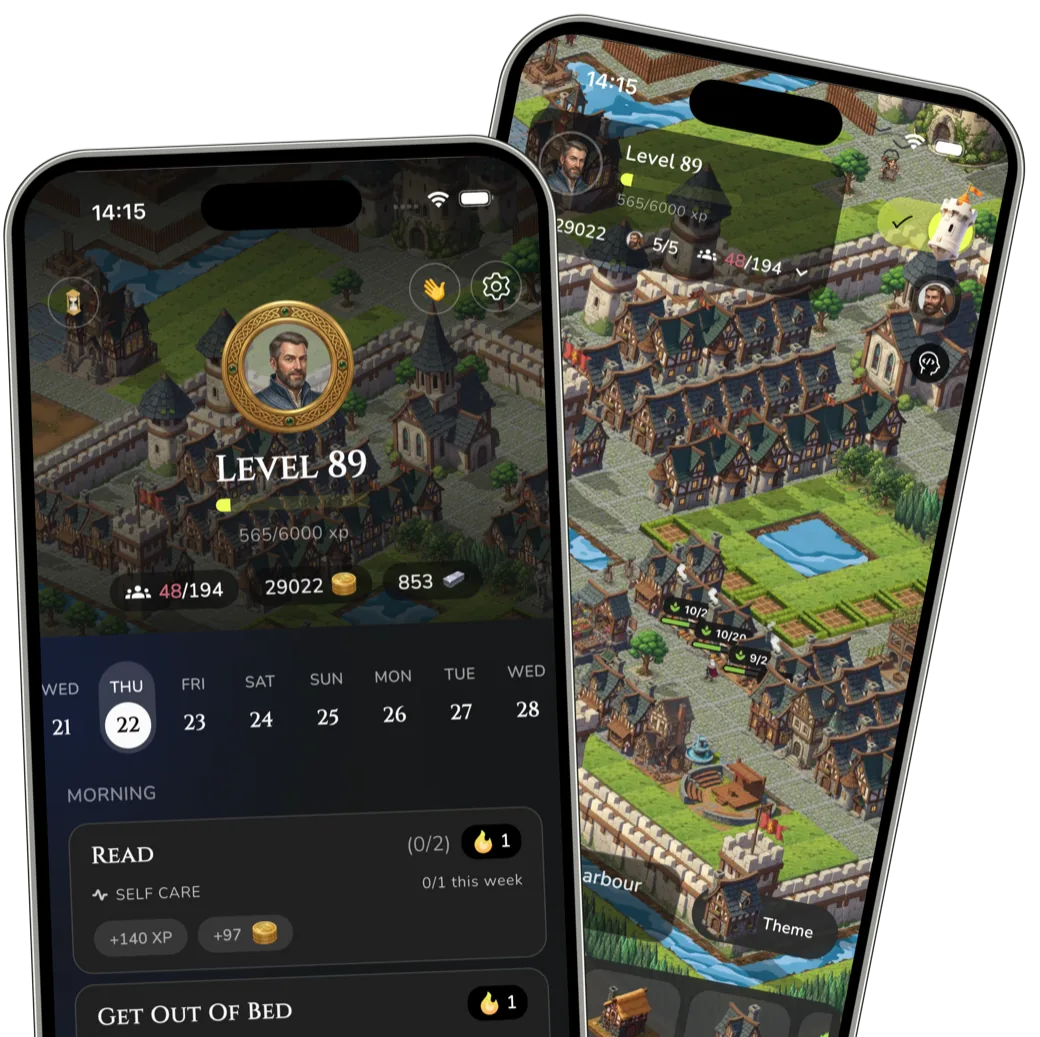
In KUBBO, create your goal with its “why”, attach your habits to it and watch your village grow with every day you check off.